If anyone still had doubts about what capitalists are planning for healthcare, which is treated as a commodity, a revealing discussion at this year’s World Economic Forum provided the answer. The topic was “How can we better invest in people? Healthcare: Cost or Investment?”. Representatives of monopoly giants, academics, and government officials did not even bother to keep up appearances. Against the backdrop of war economy, they laid bare their anti-popular plans with shocking bluntness.
Michel Demaré, Chairman of the Board of AstraZeneca, made it clear that health is considered an “investment” for the bourgeoisie, operating on the basis of “reciprocity” within capitalist production: “If you invest in health, people will have better prevention and recover faster. Fewer hospitalizations, higher productivity, fewer sick leaves”. What does he mean in practice? Capitalism wants workers healthy enough to reproduce their labour power and generate surplus value. That is where capital and the state “invest”, applying cost–benefit criteria to public health systems, at the expense of the possibilities that exist today to meet people’s needs.
Health is being reduced to a kind of “lubricant” for the machine, ensuring that the workforce remains “functional”, with a rudimentary “repair mechanism” for as long as the employer requires. This was confirmed by Bernd Montag of Siemens Healthineers: “The goal is to keep citizens healthy so that they can be productive”. German Health Minister Nina Warken stressed that “a good health system costs money” but “it is also an investment in keeping citizens healthy and therefore able to work”. She cynically acknowledged the aim of avoiding “long-term care for the elderly” and, after analyzing various aspects of “balancing expenditure and revenue”, bluntly stated: “We are preparing for the future and the impending crises in order to secure supplies in wartime conditions”.
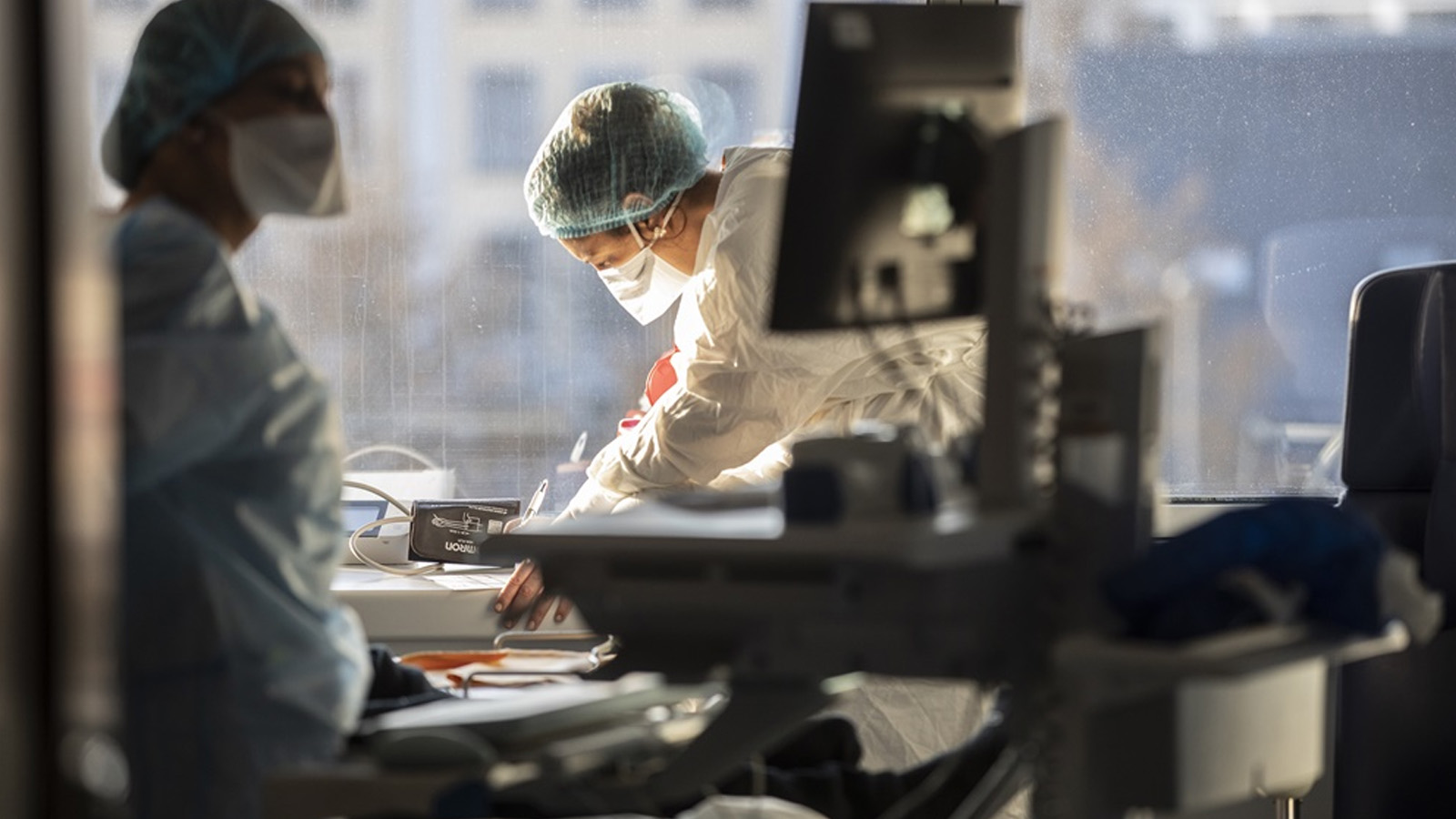
At a time when patients across the EU are waiting months for surgery or diagnostic tests, and when medical and nursing staff face exhaustion and severe shortages on a daily basis, EU officials are busy planning how healthcare structures, the pharmaceutical industry, and the medical equipment industry will serve imperialist competition and wars, and how health structures will withstand the new slaughter they are preparing. With the same zeal with which they demand that workers “stay on their feet” today to keep the profit machine running, they are preparing to turn them into “fuel” for their war machines tomorrow.
Speaking at the forum, the president of AstraZeneca linked “investments” in “defence” with those in health, presenting both as equally necessary to “open up space for investors”. When asked to elaborate, he replied that governments must help “attract medical investment” as part of a “long-term vision”, confirming the objective of creating profitable outlets for accumulated capital. Suneeta Reddy, director of a chain of private hospitals, took this logic further and, with brazen audacity, “encouraged” governments to set a target of “100% insurance coverage of of healthcare costs”. In other words, people should pay out of their own pockets through insurance contributions or private insurance.
Finally, Stefanie Stantcheva, a professor at Harvard, expressed concern about the “breakdown of trust” between the people and their governments, “especially since the pandemic”, due to the inability of strained health systems to meet increased needs, leading to the deaths of thousands of patients who might otherwise have been saved.
Their statements reveal the cynicism with which capital treats the health of workers and the people as a whole. They confirm that as long as profit remains the criterion for organizing the economy, the gap between the possibilities opened up by scientific and technological progress and the harsh reality people face —where health is treated as a commodity— will continue to widen.
The historical experience of the USSR and the countries where socialism was built refutes their narrative that there is no alternative path for the people. There, health was a genuine social good, public and free for all, with a strong emphasis on prevention from birth to old age. Within this framework, science and technology were mobilized to combat and even eradicate diseases that were widespread at the time. People from capitalist countries sought treatment in socialist countries, because care in their own countries was either impossible or prohibitively expensive. The experience of actually existing socialism not only demonstrated its superiority in this field, but also opened new horizons for the people, showing what modern scientific achievements can accomplish when power is placed in their hands!