Skip to content

D. Koutsoumbas: The three-year struggle of the Democratic Army of Greece (DSE) was just, heroic, and glorious

Date:
Apr 1, 2026
ekd-litoxoro-12

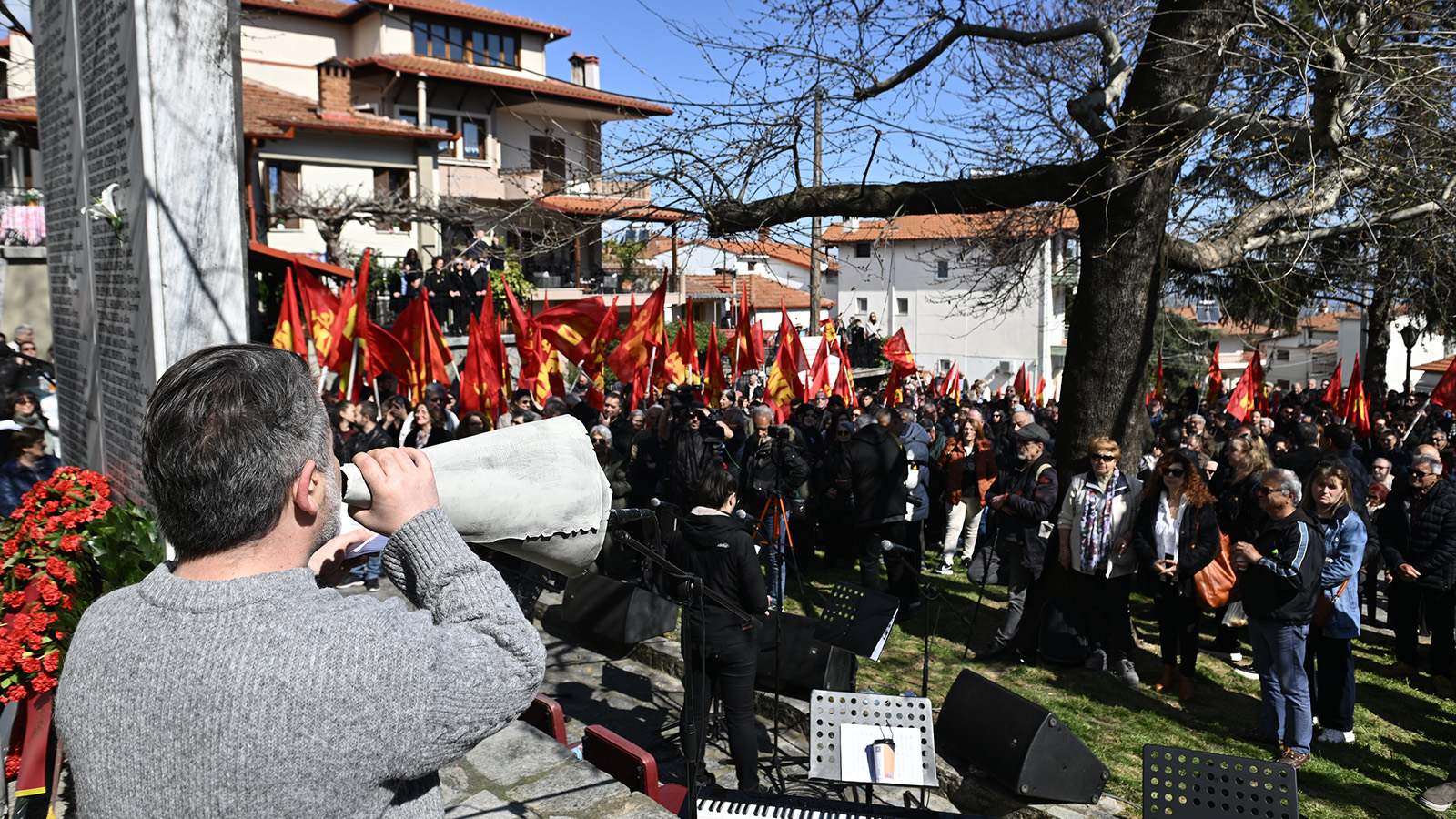
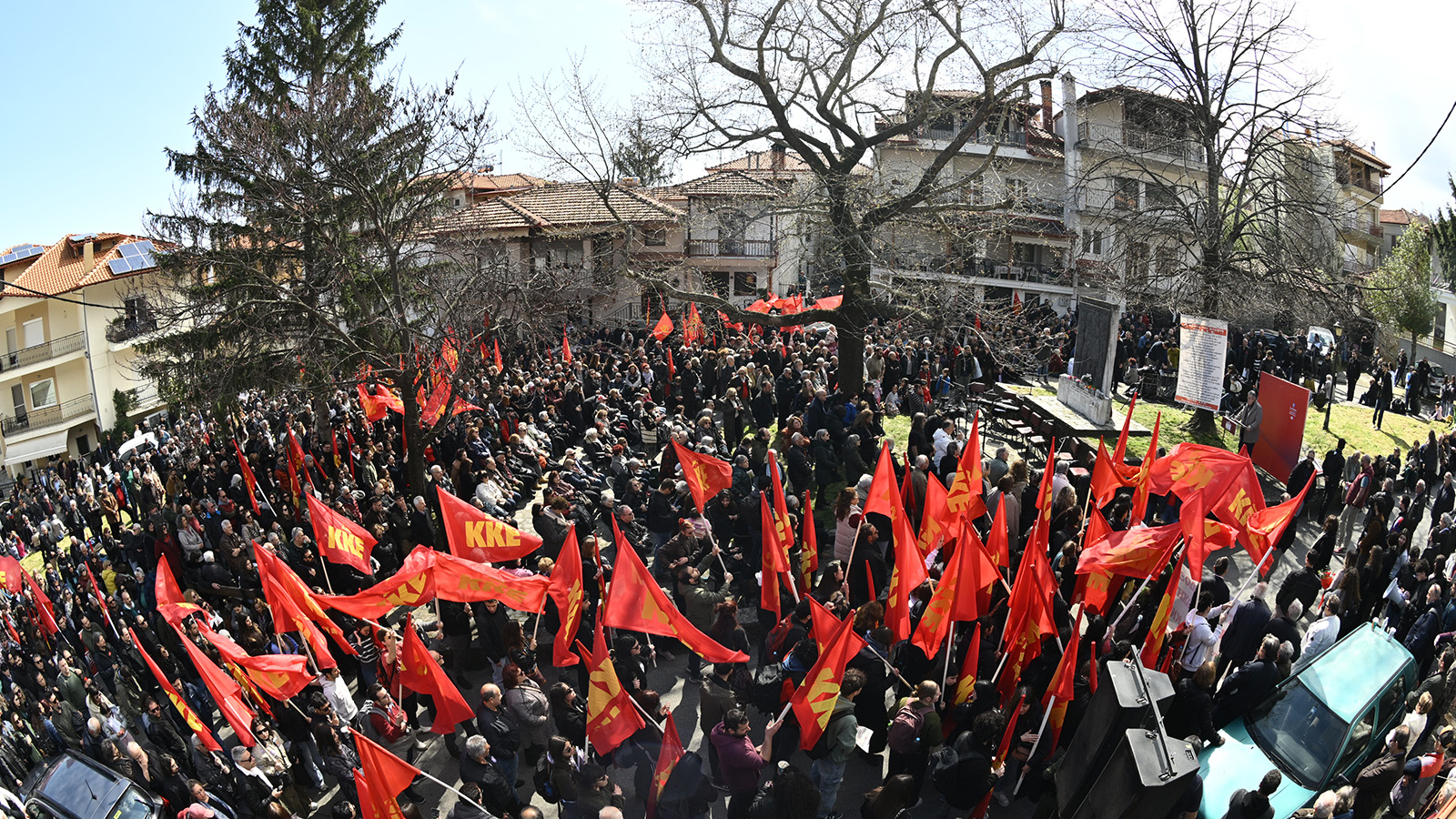
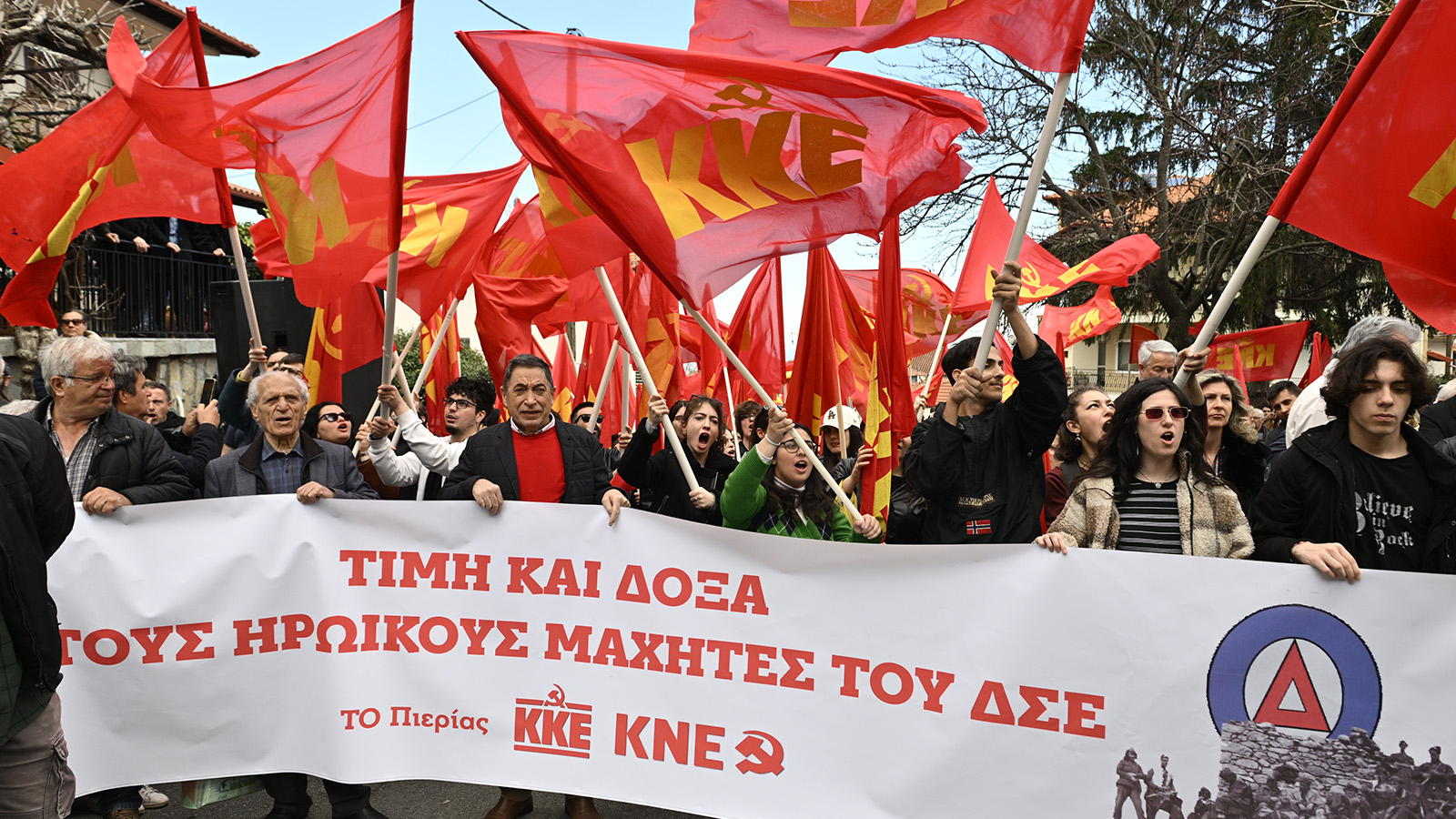
At a mass event held on 29 March 2026 in Litohoro —where, 80 years ago, the response to the “White Terror” began and led to the formation of the Democratic Army of Greece (DSE)— the Central Committee of the KKE inaugurated its programme of events marking the 80th anniversary of the founding of the DSE.

The main speaker was Dimitris Koutsoumbas, GS of the CC of the KKE, who stated, among other things: “We honour the DSE because its three-year struggle was just, heroic, and glorious. The DSE represented the interests of the overwhelming majority of the population in opposition to those of both domestic and foreign exploiters and oppressors. It represented the interests of the working class and its principal allies, the peasantry and the poor self-employed strata in the cities.

At that time, the bourgeois exploitative state power faced the greatest threat to its very existence. The DSE confronted the bourgeoisie, all its political forces and its state, as well as the capitalist states of Great Britain and the United States. Without their military, economic, and political support, the Greek bourgeoisie could not have prevailed (...)

However, the struggle of the DSE was at that time influenced by the contradictions and weaknesses in the strategy of the International Communist Movement and of the KKE itself. The Second World War was not understood as imperialist by either side of the capitalist states involved —namely the US, Great Britain, and France on the one hand, and Germany, Italy, and Japan on the other; nor was it established as a common strategic objective of the Communist Parties that the struggle should ultimately lead to withdrawal from the war through the conquest of workers’ power.


ekd-litoxoro-32

These contradictions were, unfortunately, also reflected more broadly in the KKE’s Programme, which, although it took the lead in organizing the armed liberation and class struggle, it did not clearly or promptly set the goal of revolutionary workers’–people’s power. Instead, it pursued a transitional power between the capitalist and the socialist, leading to unacceptable concessions expressed in various agreements, such as those of Lebanon, Varkiza, and Caserta.

Nevertheless, there was a possibility that the DSE could have prevailed, provided that the KKE had implemented the necessary shift in its strategy in 1946 and had decisively organized the armed popular struggle and uprising, focusing on the major cities. In 1946, the bourgeois army had not yet been reorganized, and its ranks still included many organized forces of the KKE and the EAM. At the same time, many thousands of communists and other EAM fighters remained at large, while the bourgeois state had not yet depopulated the villages.

Subsequently, it did attempt to accelerate the move towards a generalization of the armed struggle. However, time was running out for the decisive confrontation, the effectiveness of the Democratic Army of Greece, and the availability of the necessary reserves. This stands as a lesson of class struggle on a global scale: when, under a revolutionary situation, class conflict takes the form of armed struggle over the question of power, a decisive confrontation becomes inevitable, continuing until the final victory over the opponent. Half-measures or half-hearted approaches have no place in such circumstances.”

ekd-litoxoro-23
ekd-litoxoro-15
ekd-litoxoro-27
ekd-litoxoro-46