Various bourgeois media outlets in our country did not conceal their satisfaction, tinged with a dose of irony, at the recent provocative statement by Gennady Zyuganov, Chairman of the Central Commitee of the Communist Party of the Russian Federation (CPRF), who declared from the floor of the Russian parliament that a new 1917 —that is, a new revolution— must be avoided.
In an attempt to soften the impression, the CPRF press office inserted the word “February” and circulated the following excerpt from its Chairman’s speech, which differs at this point from the version captured on video:
“President Putin recently convened the government. I haven’t seen such a sombre and troubling meeting in a long time. He needed to hear from you, the representatives of the ruling party, why we find ourselves once again in an economic and production crisis. Yet he has received no clear answer to this question. We have warned you repeatedly: on this course, the economy will inevitably collapse. The first quarter has already shown a marked decline. No serious expert today believes that even symbolic growth will be achieved by the end of the year. All forecasts point to stagflation and recession. If you do not immediately take the necessary financial, economic, and other measures, if you do not radically correct the course, then this autumn we may face a situation akin to February 1917. We have no right to repeat that! We must therefore take historical experience into account and adopt decisions that are long overdue.”
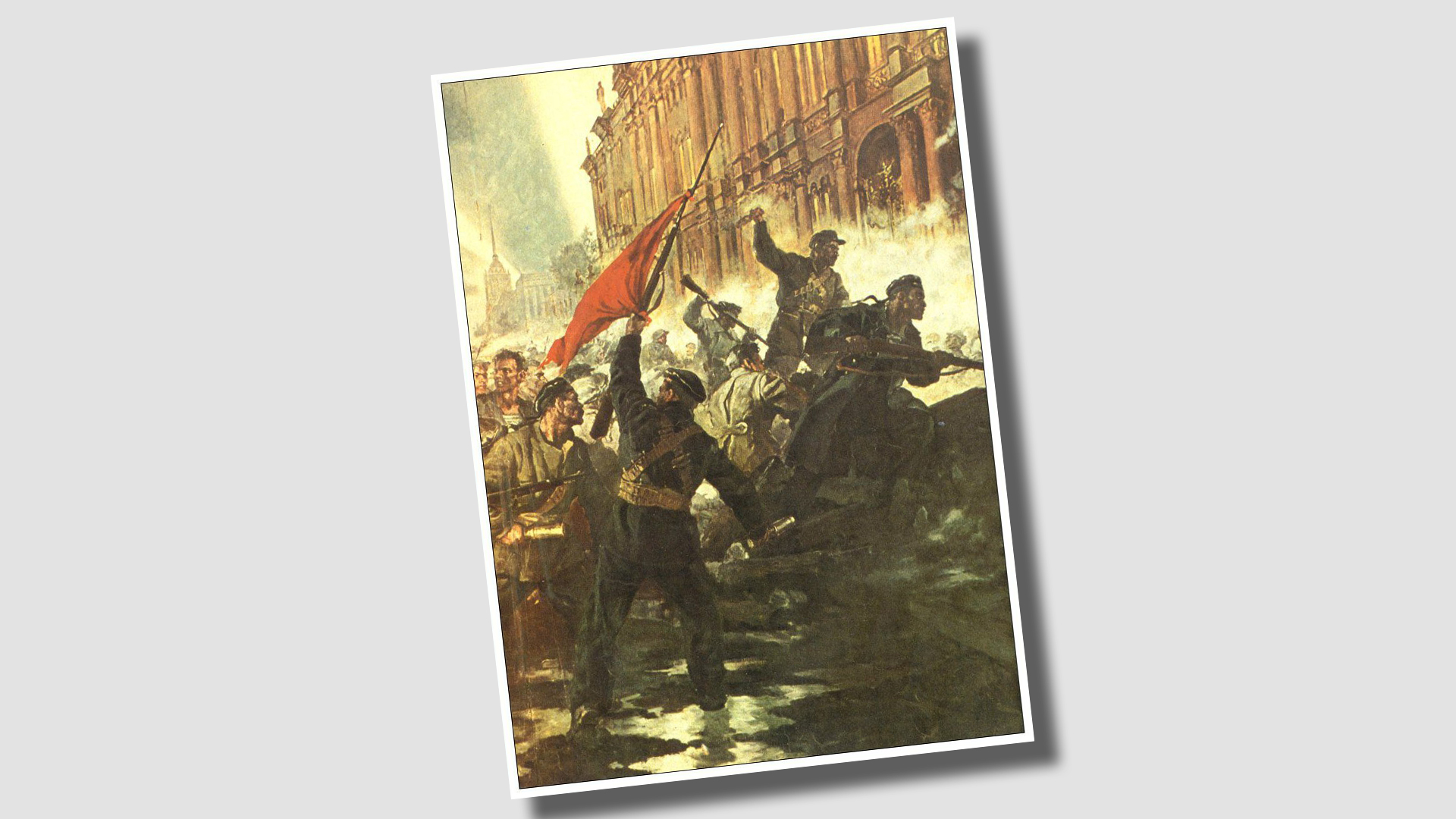
As is well known, in February 1917 saw the bourgeois–democratic revolution that overthrew the Tsar, while October 1917 witnessed the Great October Socialist Revolution in Russia.
This statement by the Chairman of the CPRF was presented as unprecedented by certain Greek bourgeois media outlets, despite the well-established fact that this particular party has for years demonstrated its integration into the bourgeois system, declaring that the era of revolutions has passed. Indeed, it has characteristically asserted that “the scope for revolutions has been exhausted”, advancing a parliamentary programme consisting of numerous reformist “stages” toward socialism, to be realized through “patriotic” and “centre–left”governments.
The representatives of the bourgeois press, who mockingly derided this particular unacceptable statement, are the very same ones who either welcome or remain silent about the banning of the Communist Parties in Ukraine and in the Baltic states of the EU, as well as other measures restricting communist activity in several European countries, including the Czech Republic, Poland, Slovakia and Hungary. These are the same people who would whish to see a replica of the CPRF in our own country, aligned with the choices of the domestic bourgeoisie and serving as a “crutch” for the advancement of anti-popular measures.
It is noteworthy that, in this same speech, the Chairman of the CPRF once again endorsed Russia’s unacceptable invasion of Ukraine and the imperialist war, absolving his country’s bourgeoisie of responsibility and placing the blame exclusively on “NATO and the Anglo-Saxons, who are waging war against the Russian world and Russian culture”. Furthermore, he pledged allegiance to the country’s President, Vladimir Putin, stating that the CPRF “is doing everything it can to support Putin and his strategy, his policies.”
To substantiate his position, he also referred to the “services” rendered by the CPRF at times when the bourgeois system in Russia was under strain, citing, among other examples, its participation “in the centre–left government of Primakov, Maslyukov, and Gerashchenko” (September 1998–May 1999, during Yeltsin’s presidency), which steered the country out of the capitalist crisis by shifting the burden onto the working-class and the popular strata.
G. Zyuganov also expressed his readiness to participate once more in a similar bourgeois “centre–left” government, stating, “Our programme is ready. Our development budget has been prepared. Our draft laws for the nationalization of key minerals, raw materials, and strategic resources have been completed. Their adoption is inevitable, regardless of the resistance of the oligarchy”.
In other words, he once again proposed a Keynesian “mix” of capitalist management, as is commonly pursued worldwide by social democracy, as well as by bourgeois parties when other “remedies” of the capitalist economy have been exhausted.
In opposition to this dead-end policy of managing capitalist barbarity —its so-called humanization— stand the Communist Parties, including the KKE, which have charted a revolutionary strategy and seek to fulfil the task posed by our era —an era of revolutionary transition from capitalism to socialism. This entails the abolition of the exploitation of man by man and the social impasses of capitalism, such as unemployment and war, through the socialization of the means of production, central scientific planning, and workers’ control, replacing profit with the satisfaction of the contemporary needs of the workers and the people.
Commentary from the daily newspaper Rizospastis, organ of the Central Committee of the Communist Party of Greece, 24 April 2026